Parents Don’t,...Really?
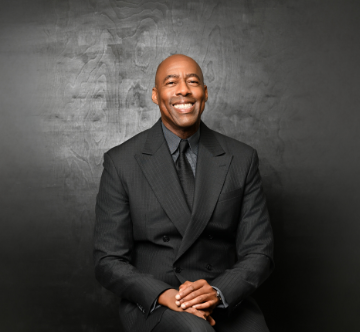

I was in the second grade during the 1974–75 school year at Windsor Hills Elementary School. My teacher, Mrs. Haydel, was an older woman who commanded respect without raising her voice. She was fair-skinned, wearing her short, curly natural with more pepper than salt. She carried herself with a grandmotherly calmness, but she did not hesitate to apply the “board of education to the seat of learning” if defiance was your forte.
That year, Black History Week left a lasting impression on me. We celebrated, read, drew, and studied the lives of prominent Black Americans whose contributions shaped society—especially within Black communities and across every field of human endeavor.
On Friday, we concluded the week with a schoolwide program. My classmates and I waited nervously outside the auditorium before taking the stage. At the beginning of the week, Mrs. Haydel assigned each of us a notable Black American. We were expected to memorize and recite a few lines about our assigned figure in front of a live audience.
I’m not sure what was more nerve-racking: memorizing the lines, standing in front of what felt like thousands of people, or searching for my parents in the crowd. Their presence brought comfort and assurance. They were always involved. Always present.
The lights dimmed. A single spotlight illuminated center stage and the waiting microphone. I could see nothing beyond that bright beam. My heart raced. My voice trembled. Sweat gathered under the glare of the light that felt like the sun.
My assigned figure was George Washington Carver. Somehow, I made it through the recitation—barely, but unscathed.
When the curtain call came, and the house lights rose, I saw what I had been searching for. The auditorium was packed—Afro-wearing mothers and fathers who looked like they had stepped off the set of Shaft. I spotted my mom. She pointed me out proudly to another parent. My namesake stood tall in the back with his familiar stoic expression. We locked eyes. He gave me a nod and an “atta boy” wink.
But that night wasn’t just about me. I would remain in the audience for two more performances because my siblings were also participating in their classes. My parents showed up for everyone of us.
They had expectations. Expectations that fueled academic achievement and progress.
The Foundation of Accountability
There is something transformative about parental love paired with accountability. Parents who remain involved throughout their children’s formative years position them for stronger outcomes—not by accident, but by intentional effort and foresight.
My mother retired early from her career as an educator, at the height of her professional prime, to invest more directly in us. My father consistently preached that scholarships were the goal. He foresaw financial challenges and understood that preparation was the key to opportunity.
They sacrificed.
Homework was not the end; it was the beginning. We read—and then read again. We memorized Scripture. We explained what we learned.
My father once painted an old closet door black and mounted it as a chalkboard. There, we worked math problems and explained each step aloud. He later took the CBEST and scored in the 99th percentile. In the math section, he got every question correct. Why? Because he checked every answer.
That was the standard.
Their parenting style was authoritative—not authoritarian. High expectations. High support. Clear boundaries. Clear love.
The Shift in Public Education
When I became an educator, I believed quality education was a threefold partnership: parent, teacher, and student.
Over time, I expanded that framework to include a fourth pillar: the community.
Yet as I evolved professionally, I also observed what I can only describe as a cyclical decline in public education. Pressure flows from the federal government to the states, from states to districts, from districts to schools, from schools to teachers, and from teachers to parents. The passing of responsibility has become routine.
Student performance declines. Analysts debate. Politicians posture. Schools restructure. Teachers face termination.
But one question remains largely untouched:
Who is holding parents accountable?
To hold teachers and districts entirely responsible is fundamentally unfair. Job losses and demotions are not long-term solutions to deep-rooted systemic challenges. They are reactionary.
Research suggests that “parent accountability” as a concept is often viewed as punitive. Fines and legal penalties for absenteeism, for example, frequently harm vulnerable families rather than address root causes. Supportive, collaborative approaches tend to produce better outcomes.
Schools already repackage accountability in more palatable language: parental involvement, parental engagement, parental expectations, parental responsibility. Yet these terms all point to the same truth: parents matter profoundly in student outcomes.
Schools and districts can support parents. Communities can reinforce expectations. But the initiating force must begin at home.
Parents Don’t Understand
Or do they?
Do contemporary parents—Gen X and Millennials—fully understand that education is not a drop-off service?
Do parents understand that teachers are facilitators of learning, not miracle workers?
Do parents understand that involvement requires sacrifice, time, discipline, and consistency?
Yes, parents are busy. Work obligations are real. Financial pressures are real. Fatigue is real.
But so are the consequences of disengagement.
The social-emotional health of children is at stake. Their academic trajectory is at stake. Their preparedness for adulthood is at stake.
Research consistently affirms what many of us witnessed decades ago. Parental involvement is one of the most significant predictors of student success. Parents are children’s first teachers; learning begins at home through reciprocal family interaction (Kaiser & Hancock, 2003). Rafiq et al. (2013) affirm that educational responsibility originates in the early years with parents before formal schooling begins. Increased parental engagement correlates with greater societal contribution and academic development (Sapungan, 2014; Vellymalay, 2011).
The evidence is clear.
Yet the question remains:
Do parents understand the weight of their role?
Call to Action: Parents, Understand This
Parents don’t understand.
Not fully.
Not yet.
But they must.
Public education cannot rise if the home foundation is unstable. Teachers cannot outwork disengagement. Districts cannot reform what families refuse to reinforce. Communities cannot compensate for chronic absence—emotional or physical.
If we truly want to reverse the downward trajectory of public education, accountability must begin where learning begins: at home.
Parents must:
Monitor assignments and academic progress.
Communicate consistently with teachers.
Establish routines that prioritize reading and discipline.
Model perseverance, curiosity, and integrity.
Reinforce consequences and celebrate effort.
Treat education not as optional, but essential.
This is not about punishment.
It is about partnership.
It is about ownership.
It is about understanding.
Parents don’t understand that they are the infrastructure beneath every policy reform. They are the unseen curriculum shaping attitudes toward authority, effort, and resilience.
If parents truly understand their power, schools will change.
If parents truly understand their responsibility, outcomes will shift.
If parents truly understand that accountability begins with them, public education will not need saving—it will flourish.
The question is no longer who is to blame.
The question is:
Parents, do you understand?
References
(APA 7th Edition)
Kaiser, A. P., & Hancock, T. B. (2003). Teaching parents new skills to support their young children’s development. Infants & Young Children, 16(1), 9–21.
Rafiq, H. M. W., Fatima, T., Sohail, M. M., Saleem, M., & Khan, M. A. (2013). Parental involvement and academic achievement: A study on secondary school students of Lahore, Pakistan. International Journal of Humanities and Social Science, 3(8), 209–223.
Sapungan, G. M. (2014). Parental involvement in child’s education: Importance, barriers and benefits. Asian Journal of Management Sciences & Education, 3(2), 42–48.
Vellymalay, S. K. N. (2011). The impact of parental involvement on students’ academic achievement. Journal of Social Sciences, 5(2), 95–102.


Comments