Role Modeling vs Mentorship

Role Modeling and Mentorship: Distinctions, Overlaps, and Lived Experience
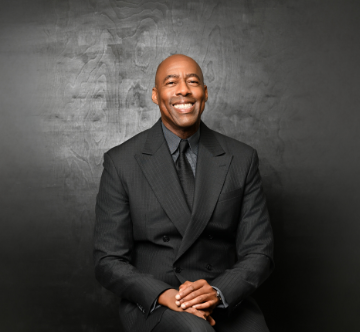
The mutual inclusiveness of role modeling and mentorship often exists within the persona of the African American male educator. At times, he is fully aware of the influence he exerts and deliberately demonstrates behaviors associated with both concepts. At other times, role modeling occurs unbeknownst to him, while mentorship—more intentional and relational—commands his full attention.
Researchers Kearney and Levine (2020) suggest that role modeling is particularly beneficial for students of color. Their findings suggest that educators can positively impact the academic outcomes and career decisions of students who share their gender and/or racial background. A role model is commonly defined as one who sets an example for others to emulate. When I reflect on my own educational journey, I can identify relatively few African American men as role models.
In elementary school, there was Mr. Metcalf, my fifth-grade teacher. During my middle school years, there were two African American men, both located in the industrial arts building. One taught art and had the most beautiful penmanship I have ever seen—even to this day. That was Mr. Leonard, who called all his male students “son.” Then there was Mr. Beatty, a small-statured man who taught metal shop. He projected order at all times. Considering that he supervised students using ball-peen hammers, nails, and molten metals, strict standards and constant vigilance were not optional—they were essential for both safety and learning.
In high school, my role models included my coaches, Mr. Dennis and Mr. Womack—two very different men from distinct backgrounds. Coach Dennis was stern and had little tolerance for what he called “bull cornin’ around.” Over time, he got to know me and granted me considerable latitude. He trusted that I would remain academically eligible, and he often saw my parents on campus, as they were heavily invested in my siblings’ education. Coach Womack, by contrast, was more relaxed in his approach. I observed that he had favorites, and I was not among them. It did not trouble me, but I noticed.
At the collegiate level, my role models appeared sporadically. As an undergraduate at Lincoln University of Pennsylvania, I encountered Dr. Nkomo, the political science department chair. A native of South Africa, he came to the United States to study after fleeing institutionalized racial segregation and white supremacy—a system that made remaining in his home country dangerous. I later learned that he and his wife were living in political exile on student visas. He was a brilliant and demanding professor who cared little for the peripheral trappings of college life. His focus was on positioning students to think critically and act with urgency. Given the circumstances he escaped in the late 1970s or early 1980s, his sense of urgency was understandable—and formative.
I did not experience Black male role modeling during my master’s program, though I certainly needed it. Still, I persevered, completing the degree with my eyes fixed on a terminal academic goal.
During my doctoral studies, I had the privilege of learning from two African American professors, Dr. Whitman and Dr. Glass. Without knowing me personally early in my journey, they nonetheless became powerful role models. I watched how they moved, how they commanded the classroom, and how they engaged intellectually. I found myself listening intently to every word they spoke. It felt as though my uncle and older brother were pointing me in the right direction without uttering explicit instructions.
Kearney and Levine (2020) note that role models need not be personally known to the individual; they may be encountered indirectly. These men, like those who preceded them in my life, shared cultural backgrounds and lived experiences that deepened my understanding of what men in their positions represented.
From my perspective, role modeling involves observing behaviors, tone, and professional conduct. It is a one-way, nonverbal form of communication—quiet, powerful, and necessary. The men I observed provided glimpses of what my future could look like beyond the doctoral journey. I mimicked what I saw, internalized what resonated, and envisioned myself on the other side of the process.
Mentorship extends role modeling by investing in connection. It wraps its arms around observation and adds intention, responsibility, and reciprocity. Because mentorship involves defined roles, it requires deliberate understanding before it can be effective. Bandura’s (1977) social learning theory explains human behavior as the product of continuous reciprocal interaction among cognitive, behavioral, and environmental influences. Shandley (1989) describes mentorship as an intentional process involving interaction between two or more individuals. McLeod (2023) emphasizes that mentorship relies on observing, modeling, and imitating behaviors, attitudes, and emotional responses. Unlike role modeling’s one-way exchange, mentorship is a two-way street defined by reciprocity. At its core, mentorship is supportive, nurturing, and often protective, intending to extend development and refine the mentee’s skills and understanding (Moore & Amey, 1998).
Mentorship generally takes one of two forms: formal or informal. Formal mentorship is structured, with clearly defined roles, goals, timelines, documentation, accountability, and evaluation processes. Informal mentorship, by contrast, is rooted in mutual interest, respect, shared experience, and flexibility. It often lacks structure but is personal and long-lasting. Research suggests that mentor–mentee relationships between educators and students of the same cultural background significantly enhance social-emotional learning, which is closely tied to academic success (Fonseca, 2022).
Years ago, while standing in a parking lot speaking with an older fraternity brother, we discussed mentorship and its dynamics. He explained that everyone exists somewhere between being a mentor and a mentee. Each of us must guide someone who needs counsel, while also remaining open to being poured into by someone more experienced. As I reflected on those I have mentored and those who have mentored me, I realized that many of us occupy both roles simultaneously. His expression made it clear to me that mentorship is saturated throughout life—it is, quite simply, how we get through it.
One young man I taught in the sixth grade became my mentee the moment I met him. When he transferred into my class mid-year, I informed his mother that I would mentor him for as long as she allowed. He was in my final class before retiring after thirty-two years in education. I took him under my wing, determined to impart knowledge and wisdom whenever possible—much of it passed down from my own father.
As graduation approached, he lacked appropriate attire for the ceremony. With his mother’s permission, I took him downtown to the garment district. He left with two suits, several dress shirts, and an understanding of how to present himself with dignity when the occasion demanded it. For the next two years, I arranged monthly outings that included haircuts, meals, and conversations with different barbers—each offering pearls of wisdom. I wanted him surrounded by positive Black men and affirming experiences.
During our lunches, I reminded him to always bring something home for his mother, keeping her emotional well-being at the forefront of his mind. This, too, was a lesson my father taught me—one I felt compelled to pass on. As I sensed my time with him drawing to a close, I hoped the seeds I planted would endure.
After nearly thirty years away from structured academia, entering a doctoral program was disorienting. Many of my cohort mates had never left the academic environment. I met Dr. Glass during an informational session on a warm October Saturday. He encouraged me to call, offered guidance, and later became both my professor and dissertation chair. Our relationship embodied both formal and informal mentorship. We met to discuss academic plans, but we also shared meals and rounds of golf—two HBCU graduates and fraternity brothers of different organizations, connecting without pressure. Through him, I experienced mentorship in its fullest form: reciprocal, empowering, and deeply human.
Conclusion
While role modeling and mentorship are often intertwined, they are not synonymous. Role modeling is observational and often unintentional, offering silent lessons through example. Mentorship, however, is deliberate, relational, and reciprocal. It requires investment, accountability, and trust. For African American male educators, the distinction matters. Understanding when we are modeling and when we are mentoring allows us to be more intentional in how we shape lives. Both are necessary. Both are powerful. But mentorship—rooted in connection and reciprocity—ensures that what is observed is also nurtured, sustained, and passed forward.
References (APA 7th Edition)
Bandura, A. (1977). Social learning theory. Prentice Hall.
Fonseca, A. (2022). Teacher–student mentoring relationships and social-emotional learning outcomes among students of color. Journal of Educational Research and Practice, 12(2), 45–59.
Kearney, M. S., & Levine, P. B. (2020). Role models, mentors, and media influences. Future of Children, 30(1), 83–106.
McLeod, S. (2023). Social learning theory. Simply Psychology.
Moore, K. M., & Amey, M. J. (1998). Some faculty leaders are born women. New Directions for Higher Education, 102, 39–50.
Shandley, K. (1989). Mentoring: Theoretical perspectives and practices. University Press.


Comments